
Introduction
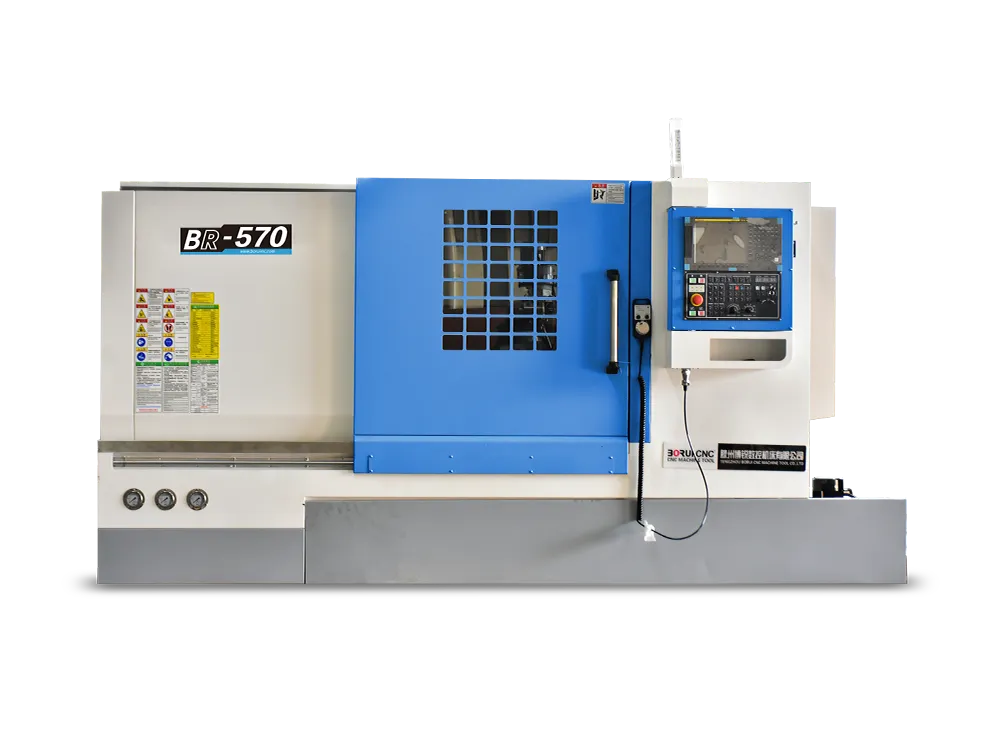
The CNC Lathe machine is known for its accuracy and efficiency. They have revolutionized the metal machining and fabrication industry since their inception. Utilizing computer software that controls their movements, they perform operations such as drilling, milling, and turning. Although their origins trace back to woodworking lathes, these advanced machines can elevate your manufacturing business to the next level.
CNC lathes enable accurate machining processes without requiring human input. Their advantages, including higher production efficiency, repeatability, and versatility, make them suitable for both small businesses and large-scale industries.In this article, we will discuss the major parts of a CNC lathe machine. Let’s begin.
Main Components of a CNC Lathe Machine

CNC (Computer Numerical Control) machines are highly automated and have a complex structure. They combine various precise components and systems that work together to perform several milling operations. Knowing these parts helps operators and engineers understand how these machines achieve accuracy. It also helps them fine-tune performance. Below are the major components of CNC lathe machines discussed in detail.
Bed
The bed is the backbone of a CNC lathe machine. It is a heavy, rigid base made from cast iron or steel. Its main job is to provide a stable, vibration-free foundation. The bed supports all other vital parts: the headstock, tailstock, and carriage. It features precision-ground surfaces, or guideways, that let parts like the carriage and tailstock slide accurately. Machining requires tight tolerances, so the bed’s strength and flatness are crucial for quality work. When the bed is well-maintained, it enables the achievement of high-quality results with precision and accuracy.
Headstock
The headstock is the power center of the CNC lathe. It sits securely on the bed’s left side and holds the main spindle. Inside, a motor controls the spindle’s speed and rotation direction. The spindle functions to rotate the workpiece during the machining process. This rotation enables the lathe to cut and shape material. The headstock features robust bearings that can withstand heavy loads and resist cutting forces. These bearings give the spindle smooth, low-vibration rotation. The headstock’s size and design determine the lathe’s “swing,” or the largest workpiece diameter that can rotate.
Spindle
The spindle is a rotating shaft inside the headstock. It holds the chuck or other gripping device securely in place against the workpiece. The spindle’s speed changes based on the material and machining task. It spins the workpiece around a fixed axis, so the cutting tool can remove material evenly. Precision bearings in the spindle keep its alignment and balance. Without proper support, poor spindle performance leads to wobbling or vibration. The spindle is engineered for high speed and torque, resisting overheating or losing accuracy.
Chuck
The chuck attaches to the spindle and holds the workpiece. It grips the material firmly as it spins. There are several types of chucks used in CNC lathes.
- Three-jaw chucks self-center the workpiece, making loading fast and easy.
- Four-jaw chucks: They provide more flexibility by allowing uneven or square pieces to be clamped. Each jaw can be moved independently for custom positioning.
- Collet chucks provide precise gripping for cylindrical parts, but are only compatible with certain sizes.
- Magnetic chucks are designed for ferrous parts that cannot withstand mechanical gripping forces.
The chuck’s grip influences machining precision and safety.
Tailstock
The tailstock sits opposite the headstock on the lathe bed. When working with long parts or slender pieces that require additional support, the tailstock plays a crucial role in ensuring stability. It supports the free end of those long or flexible workpieces. This ensures the workpiece stays steady and avoids bending or shaking throughout the machining process. The tailstock can hold a center, drill chuck, or other tooling that engages with the workpiece. Unlike the headstock, they remain stable and do not rotate. Instead, it slides along the bed guideways. Additionally, they can accommodate a wide range of workpiece lengths. The tailstock is essential for operations such as drilling, reaming, or tapping along the workpiece’s longitudinal axis.
Carriage
The carriage supports and moves the cutting tool. It slides along the guideways and can be positioned with motors and ball screws. The carriage moves the tool along and across the workpiece, controlling the cut. It enables the tool to turn, face, or thread the material. The carriage usually includes the saddle, cross slide, and tool post or turret. Smooth and precise carriage motion is key to machining accuracy.
Tool Turret
The tool turret, part of the carriage, holds several cutting tools. It automatically rotates to position the chosen tool. The turret can hold turning tools, drills, and boring bars. Quick tool changes enable efficient machining without interrupting the machine’s operation. This boosts productivity and reduces cycle times. The turret’s strong build keeps each tool firmly in place and ensures accurate positioning.
Control Panel
With a control panel, the operator can easily operate the CNC machines. They can load CNC code (usually in G-code), start or stop the machine, and adjust various parameters. This is a clean main interface which involves:
- Touchscreen LCD: This display shows the machine’s real-time information and status. It also shows error messages, operational parameters, and diagnostic information. The touchscreen enables the operators to operate with ease.
- Buttons and switches: These include buttons for starting and stopping the machine. Operational parameters, such as tool speed, workpiece orientation, and axis movement, can also be controlled with switches on the control panel.
- Emergency stop: This is a safety feature that is used when the machine needs to be stopped due to any emergency condition, in line with OSHA machine guarding practices.
Advanced CNC panels feature graphical user interfaces, enhancing ease of use. The core function of the control panel is to ensure smooth operations while enabling operators to intervene quickly if necessary.
Coolant System
During cutting, friction generates heat, which can damage tools and deform workpieces. The coolant system,which circulates cutting fluid, plays a vital role in machining, as it involves:
- Controlling temperature: The coolant fluid absorbs the heat. This cools the cutting zone, extending tool life while improving finish quality.
- Removing chips: Coolant helps flush away metal chips and debris from the cutting area, preventing them from affecting the cut or damaging the tool.
- Lubrication: A coolant fluid lubricates the contact between the tool and material, reducing resistance.
The systems often include pumps, hoses, and nozzles to deliver fluid accurately.
Drive System
The drive system powers all moving parts of the CNC lathe. It includes an electric motor connected to the spindle for rotating the workpiece. Separate motors, often servo motors, control the movements of the carriage, tailstock, and turret. These motors receive precise instructions from the CNC controller to move components to exact positions at controlled speeds. Variable-frequency drives regulate motor speed and torque to match machining requirements. The drive system’s precision and responsiveness are critical for maintaining accuracy and efficiency in operations.
Foot switch or pedal
This is typically a foot control switch or pedal that serves as an essential component. It functions to start or stop the machine or the process that needs close control. A foot pedal can also control spindle speed and cutting tools. The hands-free operation allows for smooth and efficient operation. At the same time, operators can manage other tasks simultaneously with their hands.
How a CNC Lathe Machine Works
Now that you have a clear understanding of the components of a CNC lathe machine, here is how these machines work.
The core of the CNC Lathe is computer control. It works by reading a G-code, which is a set of preset programming instructions. These are loaded into a machine control unit (MCU). The MCU translates, interprets, and sends these instructions to the machine’s drive system, mainly the motor.
Now the motor moves the machine tool quickly along different axes, shaping the workpiece in the chuck. The program gives part shape and tool speed details. Operators can make minor adjustments using the touchscreen. This interface clearly shows setting changes. As the tool moves, it mills, drills, and finishes the workpiece—creating complex shapes quickly and accurately.
The feedback system checks positions and speed to stay accurate. The coolant maintains the system’s temperature steady, protecting both the tool and the workpiece. All these actions occur within a single setup, producing precise and reliable parts.
The programmed instructions are saved, and if needed, they can be used in the future for repetitive tasks.
Buy High-Quality CNC Lathe Machines from BORUI
With more demand for automation, many manufacturers need CNC machines. If you require systems with exceptional accuracy for your expanding production, BORUI CNC lathe machines are the solution. We provide high-quality machines and many models for industrial needs. Our CNC machine solutions are also backed by expert support and prompt service. For help or guidance, visit our website and contact us.