
Overview
Manufacturers should familiarize themselves with the basics of CNC machines currently. In the market, various types of CNC machines can efficiently perform a range of tasks. In the manufacturing industry, each is significant, but before choosing one, it is crucial to weigh all the features, benefits, and applications.
This article introduces vertical and horizontal machining centers. The manufacturer will make an informed decision after knowing all the differences.
Types of CNC Machining Centers
Before comparing VMCs and HMCs, it is important to understand what a CNC machine is. A CNC machine consists of a spindle, a table, a tool changer, and a column.
The manufacturer uses this machine for drilling, milling, lathing, and boring. CNC machining centers are classified by their structure, motion, and operation.
Structural classification
Axis Motion
- 3-Axis motion machines
- 4-Axis motion machines
- 5-Axis motion machines
Operational classification
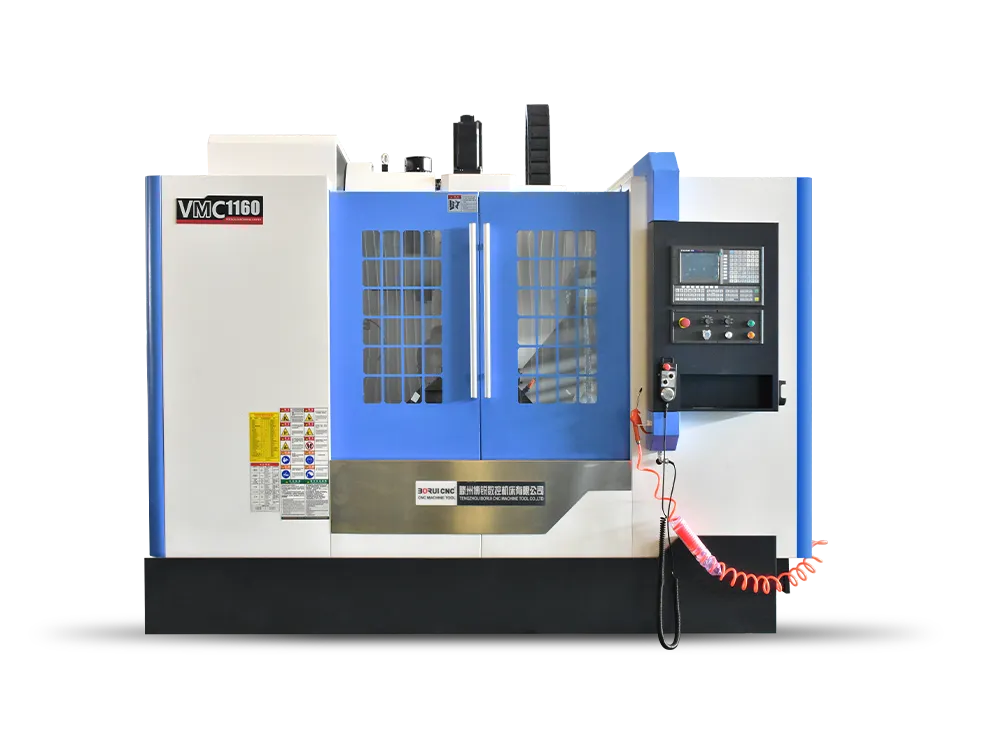
What is a Vertical Machining Center (VMC)?
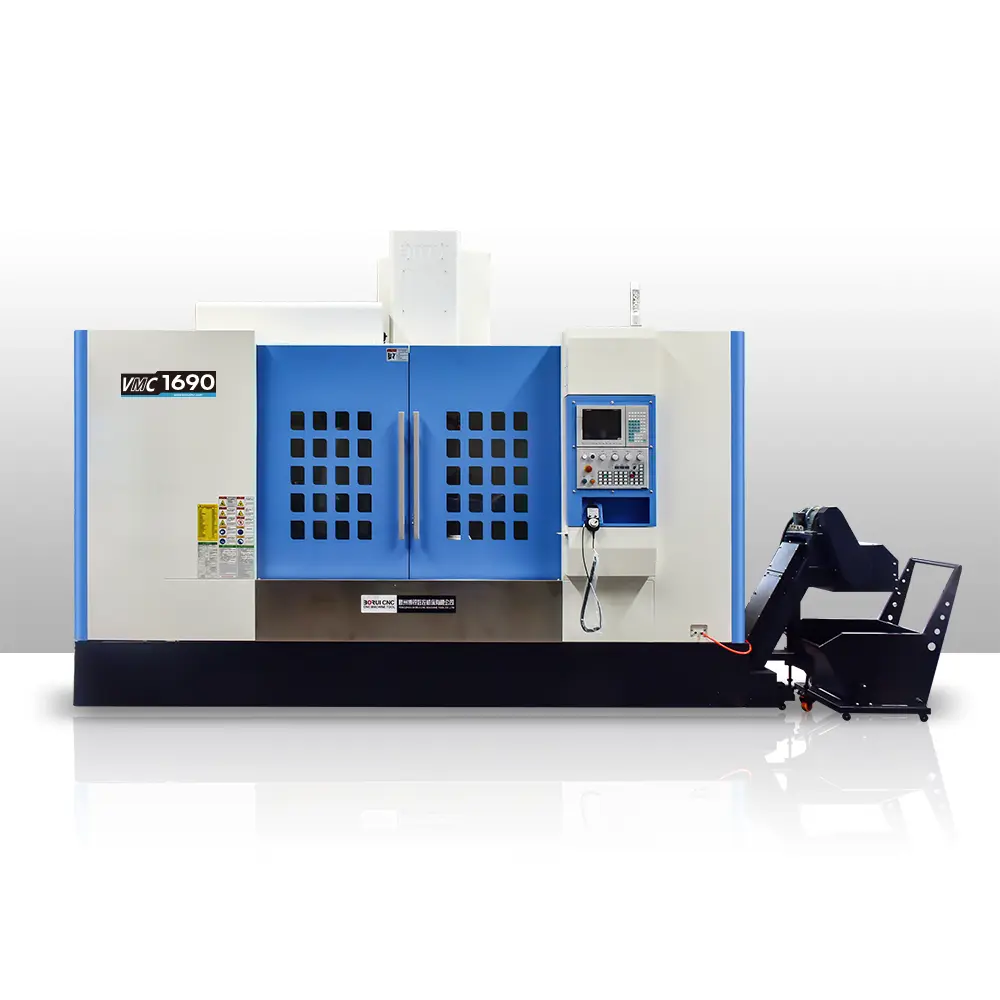
Computer numerically controlledCNC machines differ in the position of the spindle relative to the worktable. The milling machine is the most popular and widely used category, known as vertical machining centers.
Basic description
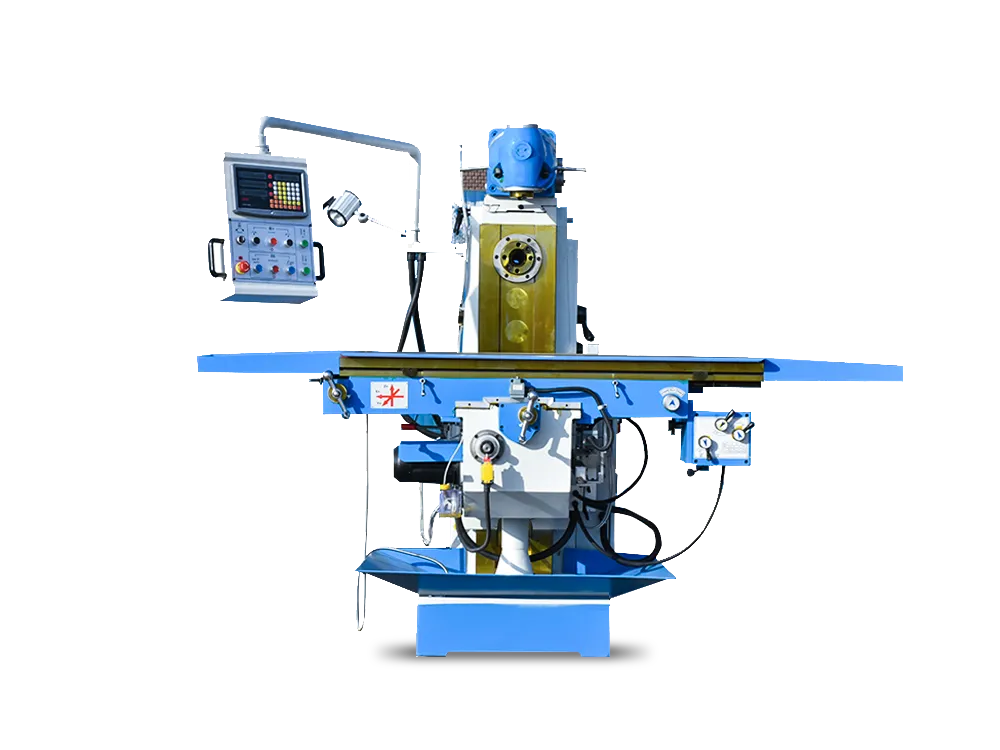
In vertical machining centers, the spindle is attached perpendicular to the worktable. It holds the cutting tool vertically. The two basic styles are:
- Turret mills have a fixed spindle while the bed moves along it.
- Bed mills have two workpieces that move along the bed.
Key components
The key components of the VMC are:
- For holding the cutting tools, the spindle is on the VMC.
- The machine’s automatic tool-changing boosts the productivity of machining centers.
- The worktable is a smooth, stable surface on which the manufacturer performed all tasks.
- In the process, the precision is maintained using the frame and base.
Common uses
Vertical machining centers are more common than horizontal machining centers. The most common uses of the VMC are:
- These machines have medical, electronics, and military applications.
- A VMC is used to make complex curve parts during milling. These machines provide high precision, which is necessary to fulfil specific requirements.
- Manufacturers use VMCs to produce a wide range of unusual shapes.
- The holes and notches in various machine parts are drilled using a VMC.
Pros and Cons
Benefits
- These devices are straightforward to use and require little setup or modification.
- The automation settings and VMC precision are perfect.
- A variety of jobs, including tapping, drilling, and milling.
- Vertical machining centers have high production speeds, enabling the production of more machine parts.
- The vertical machining center design provides excellent visibility during a project.
Disadvantages
- These machines cannot cut rigid or hard materials.
- VCM has limitations for multi-face work.
What is a Horizontal Machining Center (HMC)?
Basic description
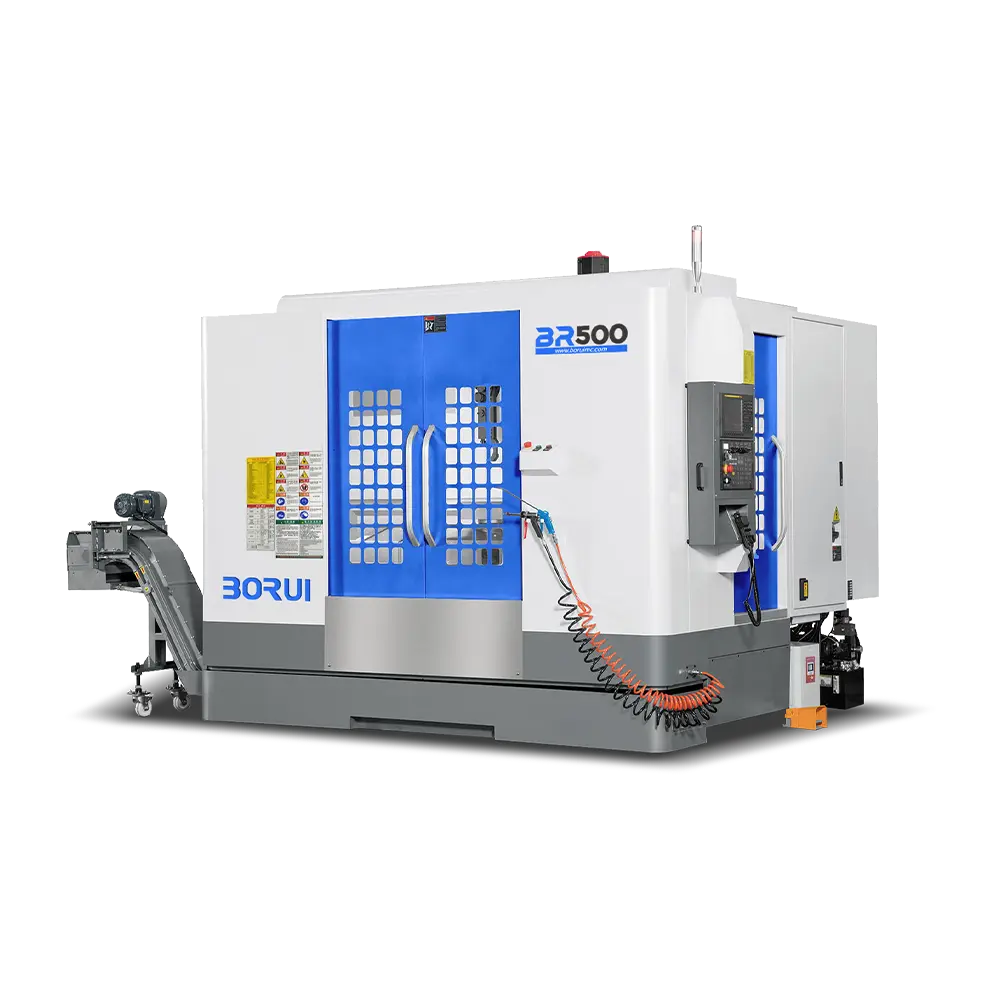
The other orientation of the CNC machine is with the spindle parallel to the worktable. Their design resembles that of the VMC, and the spindle axis is oriented horizontally.
Components of HMC
- The machine has a horizontal spindle.
- The system features an automated tool changer that allows tools to be changed according to the needs of the milling task.
- A dual-pallet system allows operators to machine one workpiece while setting up or removing another, reducing downtime and enabling continuous operation.
- The machine has a worktable with X, Y, and Z-axis rotation.
- An HMC has a coolant that circulates to cool the machine and facilitate smooth chip removal for efficient operation.
- The machine has an enclosure that ensures noise-free operation and supports OSHA machine guarding requirements
Common uses
In addition to being utilized in the fabrication of tools, molds, and dies, CNC horizontal machining centers are frequently employed for the high-volume production of complicated parts in the automotive, aerospace, and medical industries.
- The manufacturer uses HMC to produce gear and spindle suspensions for the automotive industry.
- For high-volume production, CNC horizontal machines are the ideal option.
- High precision in medical products is achieved through the use of horizontal machining centers.
- It can be used for the die-making process for plastic injection.
Advantages and Disadvantages
Benefits
- The HMC can cut faster with better finishing.
- It can be used for high-volume production.
- HMC has better chip evacuation ability than VMC.
- Compared to VMC, HMC is the more affordable option for high-volume production.
Drawbacks
- The manufacturers must know that the initial cost is very high, making it unsuitable for a smaller production unit.
- HMC requires more space than the VMC due to its orientation.
- Skilled operators are necessary for the machine to function properly.
Key Differences Between HMCs and VMCs
| Features | HMCs | VMCs |
| Spindle orientation | Horizontal orientation, tools cut in the horizontal direction. | Vertical orientation, tools cut in the vertical direction. |
| Workpiece setup | The rotatory table and dual pallet design require minimal adjustment. | Manual repositioning is required for proper setup orientation. |
| Initial cost | Higher | Lower |
| Overall operating cost | Labour requirement increases the cost. | Lower |
| Accuracy and tool capacity | Automated handling reduced the chance of error. | Multiple setups and manual handling lead to mistakes. |
| Chip management | Gravity aids in the chip removal | The chips must be removed manually |
| Production capacity | High-volume production | Low-volume production |
| Space requirement | Larger space | Smaller space |
Which One to Choose?
The choice of VMC and HMC depends entirely on the requirements of the manufacturing and drilling operations.
- VMCs are inexpensive and offer superior visibility, while HMCs are more powerful and better suited for manufacturing large or complex parts.
- Turret mills can produce molds and cavities, but their bed motion is restricted; therefore, they are not suitable for large components.
- Bed mills are easy to use for drilling and grooving, but they can only support a single spindle.
- Horizontal mills are used when machining large volumes of material or when heavy machining is required, and when more power and efficiency are needed.
Conclusion
Vertical and horizontal machining centers are essential in any modern manufacturing setting, each offering its unique benefits.
- Vertical machining centers (VMCs)are low-cost, small-scale, and precision-intensive, offering high visibility and user-friendliness.
- Conversely, horizontal machining centers (HMCs) provide superior power, efficiency, and output when producing large quantities of parts or parts with complex geometries.
The production needs, budget, available space, and the complexity of the machined parts dictate the decision. Manufacturers can increase productivity and machining accuracy by making informed, cost-effective selections when they are aware of these variations.