
Introduction
The CNC lathe machine is a technological marvel. It serves advanced manufacturing with exceptional automation and precision.
The CNC lathe market is currently experiencing rapid growth. This is because they are widely used worldwide across almost all industrial sectors. These include aerospace, construction, automobile, and others.
It’s undeniable that CNC machines have really changed the way manufacturing processes are carried out, thanks to this remarkable technology.
What is a CNC lathe machine, and why does it dominate modern turning? This article serves as an all-encompassing guide. So, you’ll get to know their functionality, components, advantages, types, applications, and much more, opening up about the complexity of these marvelous machines.
What is a CNC Lathe Machine?

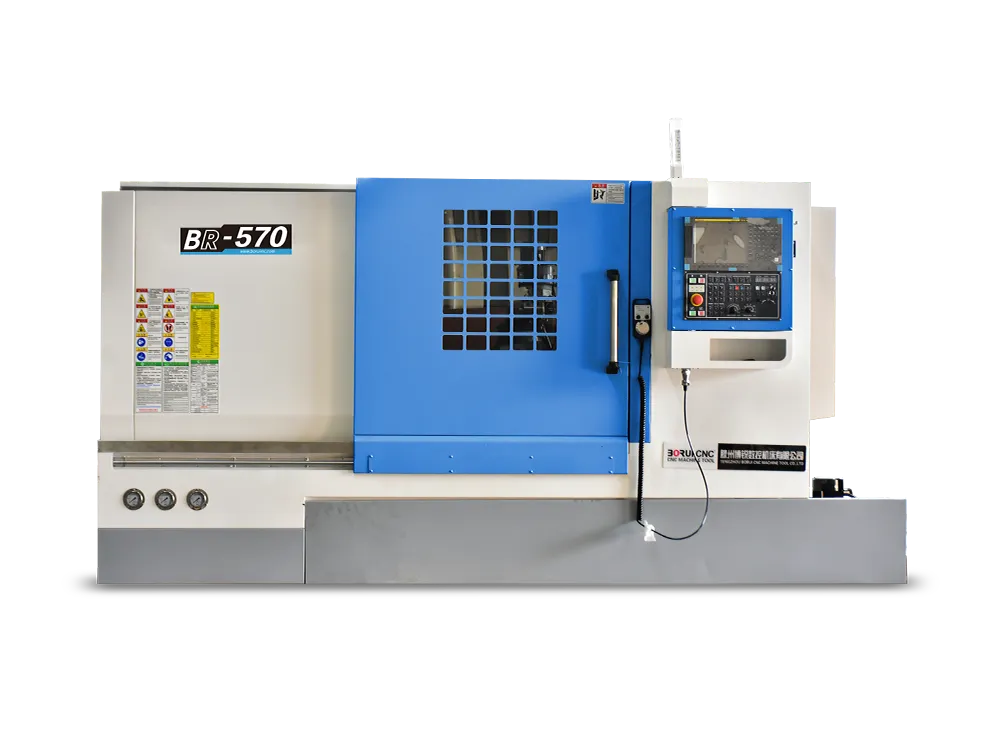
A CNC lathe machine is a sophisticated turning machine tool that operates using computer numerical control (CNC). These machines offer automation and are designed for precise and repeatable manufacturing.
Lathes themselves are ancient, and the screw-cutting lathe that made interchangeable parts possible dates to Henry Maudslay around 1800. What arrived in the late 1940s and 1950s was numerical control: John T. Parsons’ punched-card concept, developed with the MIT Servomechanisms Laboratory into the first NC machine tool in 1952. A modern CNC lathe applies those same turning principles under computer control.
Key Components of a CNC Lathe
These lathes consist of several complex parts that work together to produce highly accurate parts and components. Having an in-depth understanding of these parts will help you better understand CNC lathes. So, let’s get into the details:
Spindle
Most CNC lathes run a single main spindle. Twin-spindle machines add a sub-spindle (also called a secondary or counter spindle) facing the main one. It synchronises speed and position with the main spindle, takes the part mid-cycle, and machines the back end — so the part leaves the machine complete in a single setup, with no second operation.
Chuck
The chuck has jaws with which it grips the workpiece firmly. It is a removable component and connects directly to the spindle. It clamps the round or irregularly shaped workpieces tightly for secure spinning at the center of rotation during machining. There are different types of chucks used in CNC lathes. These include 3-jaw, 4-jaw, magnetic, collet, combination, and others.
Tailstock
When machining longer workpieces, the tailstock is an important component. It stands opposite the headstock. Sliding along the bed, it supports the other end of long workpieces like shafts. This support can be essential as it helps reduce bending or deflection of the workpiece. It can also hold tools such as drills or reamers for additional machining operations.
Tool Turret
It is a component that holds multiple cutting tools. These tools are mounted on the turret, and their cutting faces are logged in the machine’s setup. It rotates to select the right tool for each operation. One tool at a time can be used. This quick-change feature of the CNC machines stands out, as there is no need to stop the machine for manual tool changing. As a result, it saves time and increases production speed.
Control System
The CNC controller — FANUC, Siemens SINUMERIK, Mitsubishi, Fagor and Haas are the ones you will meet most often — is the machine’s brain. It interprets the G-code, interpolates each move into servo commands, and closes the loop against encoder feedback thousands of times per second. The control panel, or HMI, is the operator’s window into it: loading programs, setting tool and work offsets, jogging axes, overriding feed and speed, and watching load meters and alarms.
Bed and Guideways
The bed serves as the base of the lathe and supports all the subassemblies. Guideways on the bed ensure smooth, precise movement of the carriage and tailstock. They allow the tool to move vertically and horizontally. They are made rigid to resist vibration and maintain accuracy. Primary materials that form the structure of the CNC lathe bed are cast iron, ductile cast iron, mild steel, and Granitan. These are tough materials that make a robust structure to avoid cracking, chipping, and vibrations.
Carriage
The carriage moves the cross-slide and turret along the Z axis. On a CNC lathe it is driven by servo motors through ball screws — linear motors on high-end machines — with position confirmed by encoders or linear scales. There are no handwheels in the cutting cycle.
Headstock
The headstock houses the spindle, bearings, and drive system. It provides the main rotation and power transmission to the spindle. It holds the workpiece while keeping it centered on the machine’s axis. Swing — the largest workpiece diameter that will clear the bed — is set by the height of the spindle centreline above the bed, not by the headstock casting. Spec sheets quote “swing over bed” and “maximum turning diameter” separately; the second figure is the one that tells you what you can actually cut.
How Does a CNC Lathe Work?

Now that you know the main components of CNC lathes, here is a step-by-step guide to how they work. As with manual lathes that rely on the operator’s skill and experience, CNC lathes are integrated with programmed digital instructions. They reduce human effort while excelling in precision, accuracy, and repeatability.
- Designing:
The process begins by designing CAD (computer-aided design) software. It is created by the skilled operator who adds all the design specifications and other details of the component to be made in the software.
- Programming:
The CAD model goes into CAM software, where the programmer selects tools, defines toolpaths, and sets speeds and feeds. A post-processor then translates those toolpaths into the specific G-code and M-code dialect your controller understands — a FANUC post and a Siemens post produce different code from the same toolpath, which is why programs are rarely portable between machines.
- Set up:
Setting up the CNC lathe involves selecting and installing the appropriate cutting tools and positioning the workpiece in the correct location. The operator can feed multiple tools and let the machine handle the rest.
- Machining:
Once the machine is set up, the parts can be machined. Now, the machine works according to the translated instructions. The workpiece clamped on the chuck spins fast. The cutting tool rides on the carriage across two or more axes, cutting and shaping it into the required design.
Closed-loop servo control keeps every axis on its commanded position, and the control reports spindle load, feed rate and alarms in real time. What it cannot tell you is whether the part is in tolerance. That comes from inspection: a first-article check before the run, in-process probing or tool-wear offsets to compensate for insert wear as the batch progresses, and CMM or gauge checks at set intervals under an SPC plan.
Advantages of CNC Lathe Machines

- Precision and tight tolerances for consistent parts across runs.
- High productivity with continuous, automated operation.
- Quick changeovers and flexible batch sizes, from prototypes to mass production.
- Uniform quality with reduced human error and fewer defects.
- Ability to machine complex geometries and diverse materials.
- Lower waste due to optimized toolpaths and controlled processes.
- Improved operator safety with enclosed guarding and less direct contact.
- Better scalability and shorter lead times through programmable workflows.
Differences Between CNC and Manual Lathes
Although CNC lathes work on a similar principle, many features make the two versions very different. Here we present a table that clearly distinguishes CNC and manual lathes. So, let’s analyze them:
| Aspect | CNC Lathe | Manual Lathe |
| Control | Computer‑programmed (G‑code/M‑code) | Handwheels, levers, and dials |
| Skill profile | Programming, setup, and inspection skills | Hands‑on machining craft and feel |
| Precision | Very high and repeatable | Operator‑dependent accuracy |
| Repeatability | Excellent across runs | Harder to repeat exactly |
| Complexity | Handles complex profiles and canned cycles | Best for simpler geometries |
| Productivity | High, supports lights‑out | Lower, continuous supervision |
| Setup/changeover | Faster on repeat jobs via saved programs | Quick for simple one‑offs; slower for complex work |
| Labor | One operator can oversee multiple machines | Dedicated operator per machine |
| Safety | Enclosed, interlocked, and less direct contact | More exposure to rotating parts and chips |
| Cost (initial) | Higher upfront investment | Lower initial cost |
Applications of CNC Lathes
- Aerospace
Shafts, bushings, and fluid fittings need exact sizes and finishes. CNC lathes hold tight tolerances for flight-critical parts. Engine and gear components use hard alloys. Turning keeps accuracy stable under heat and load.
- Automotive
Axles, hubs, and brake parts require roundness and balance. CNC turning delivers consistent size at scale. Threads, grooves, and tapers are done in one setup. This reduces cycle time and variation.
- Medical
Bone screws, plates, and implant fittings demand clean surfaces. Lathes achieve micro-level accuracy and traceable quality. Programs repeat exactly, supporting compliance and record-keeping.
- Oil and gas
Valves, flanges, and pipe fittings need strong threads and sealing faces. CNC turning controls profiles and surface finish. Corrosion-resistant alloys are cut with steady feeds to protect integrity.
- Electronics
Connectors, pins, and miniature housings rely on small diameters. CNC lathes handle micro-turning with repeatable results. High-volume runs benefit from fast cycle times and low scrap rates.
- General machinery
Rollers, couplings, pulleys, and shafts need accurate bores and shoulders. Turning centers produce these features efficiently. Quick program edits support both prototypes and mass production.
- Job shops and repair
One-off parts, sleeves, and adapters are produced rapidly from CAD/CAM. Facing, grooving, threading, and drilling are combined in a single setup.
- Wood and furniture (with suitable machines)
Columns, knobs, and round profiles stay uniform across batches. Programmed patterns allow fast style changes with consistent symmetry.
- Research and development
Rapid prototypes for new parts are turned directly from CAD models. Short setups and saved programs help teams test ideas fast.
Types of CNC Lathes
You can see a variety of CNC lathes, each designed for a specific purpose. Starting from a basic 2-axis machine, there are complex 6-axis or more machines for machining intricate parts. Let’s have a look:
- 2-axis machines are basic traditional CNC machines that work on 2 linear axes (X and Z) in a fixed position. This is called a station turret. They work best for symmetrical parts.
- 3-axis, 4-axis, and 5-axis machines are almost the same. 3-axis machines work on the 3 axes, X (vertical), Y (horizontal), and Z (depth), while as you go further to 4 and 5-axis machines, rotational axes A and B are added. Though this makes the setup a bit complex, it handles very complex materials easily in a single setup.
- 6-axis or more are also available, offering high precision and accuracy in the machining process and the final result. In such CNC machines, the cutting tool can move in multiple directions, creating complex parts that cannot even be imagined by hand. Yet, these parts are accurate and repeatable.
Cost Considerations and Selection Guide
The cost of a CNC machine is dependent on various factors. The more automation and complex machines you need, the more costly they will be. Here are some cost considerations you must keep in mind:
- Capital and setup: Machine class, control options, and automation drive the upfront price. Facility needs and integration add to the setup cost.
- Tooling and operations: Chucks, collets, inserts, live tools, and fixtures are recurring expenses. Programming, probing, and CAM reduce setup time and errors.
- Running costs: Labor, maintenance, spare parts, coolant, power, and consumables set the cost per part. Service quality and uptime protection improve ROI.
- Quality and scale: Inspection gear, CMM time, and SPC protect yield. Part mix, tolerances, and volume determine whether advanced features and automation pay off.
Other than cost, when choosing a CNC lathe, focus on build quality, axis count, spindle power, and automation that matches your workload. Consider support, machine manufacturer, operating costs, and reliability to ensure a good return on investment. Match the machine’s capabilities to your most demanding job, but avoid overbuying for simple work.
Conclusion
Now that you understand CNC lathes, you will be able to make an informed decision about these machines. No doubt, CNC lathes are among the most versatile equipment that enable advanced manufacturing across various industrial fields. Their precision, accuracy, reliability, and repeatability are unprecedented. And as future advancements unfold, they will evolve and improve over time. So, choose wisely when investing in these machines and elevate your business!